
Part 2 – The Ly Dynasty developed through 8 kings
The Ly Dynasty developed through 8 kings
Next, we will enter the Linh Cung section, where the altar of the 8 kings of the Ly dynasty is placed. At Temple Do worship 8 kings, but according to the ancient architecture of the ancient people, they built the temple with an odd number of compartments to create a balance for the temple, so the Do Temple has only 7 compartments instead of 8 worshiping rooms.
Do Temple worships 8 kings of the Ly Dynasty, including: Ly Cong Uan or Ly Thai To, Ly Thai Tong, Ly Thanh Tong, Ly Nhan Tong, Ly Than Tong, Ly Anh Tong, Ly Cao Tong and Ly Hue Tong.
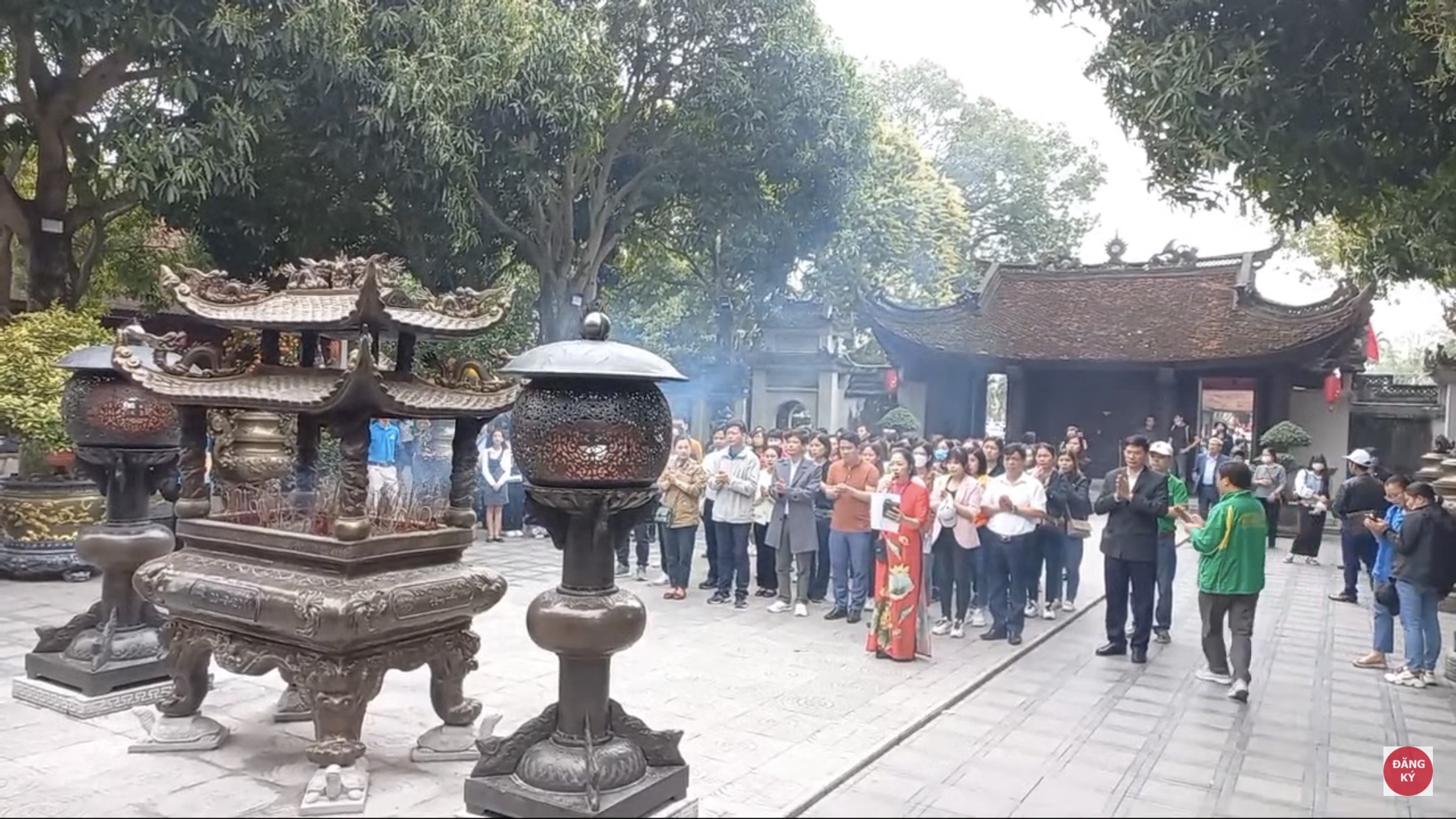
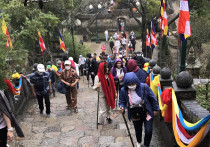
Groups of tourists are celebrating at the Dragon Court, photo by LAG Media
The nave worships the first two kings to reign. The first king was Ly Thai To or Ly Cong Uan. Before King Ly Cong Uan left the capital from Hoa Lu to Dai La citadel, he decided to write a copy of the Order to leave the capital. In the Order to Leave the Capital of King Ly Cong Uan, it was analyzed that: Because of his great plan, he chose to stay in the center, take care of his descendants for eternity, obeying the orders of heaven above, obeying the will of the people below. new convenience. From the place of Hoa Lu defensive position to the open position of Thang Long, from the rugged mountains to the plain, convenient for both land and water transportation to create conditions for future development. King Ly Thai To reigned for 18 years and lived to be 55 years old.
Next to the place of worshiping King Ly Thai To is King Ly Thai Tong, the eldest son of King Ly Thai To. Sitting in the pavilion of the king’s father, to represent the succession of fathers and children. When King Ly Thai Tong ascended the throne, he personally took a plow to plow a pole of field to make a ceremony for the people.
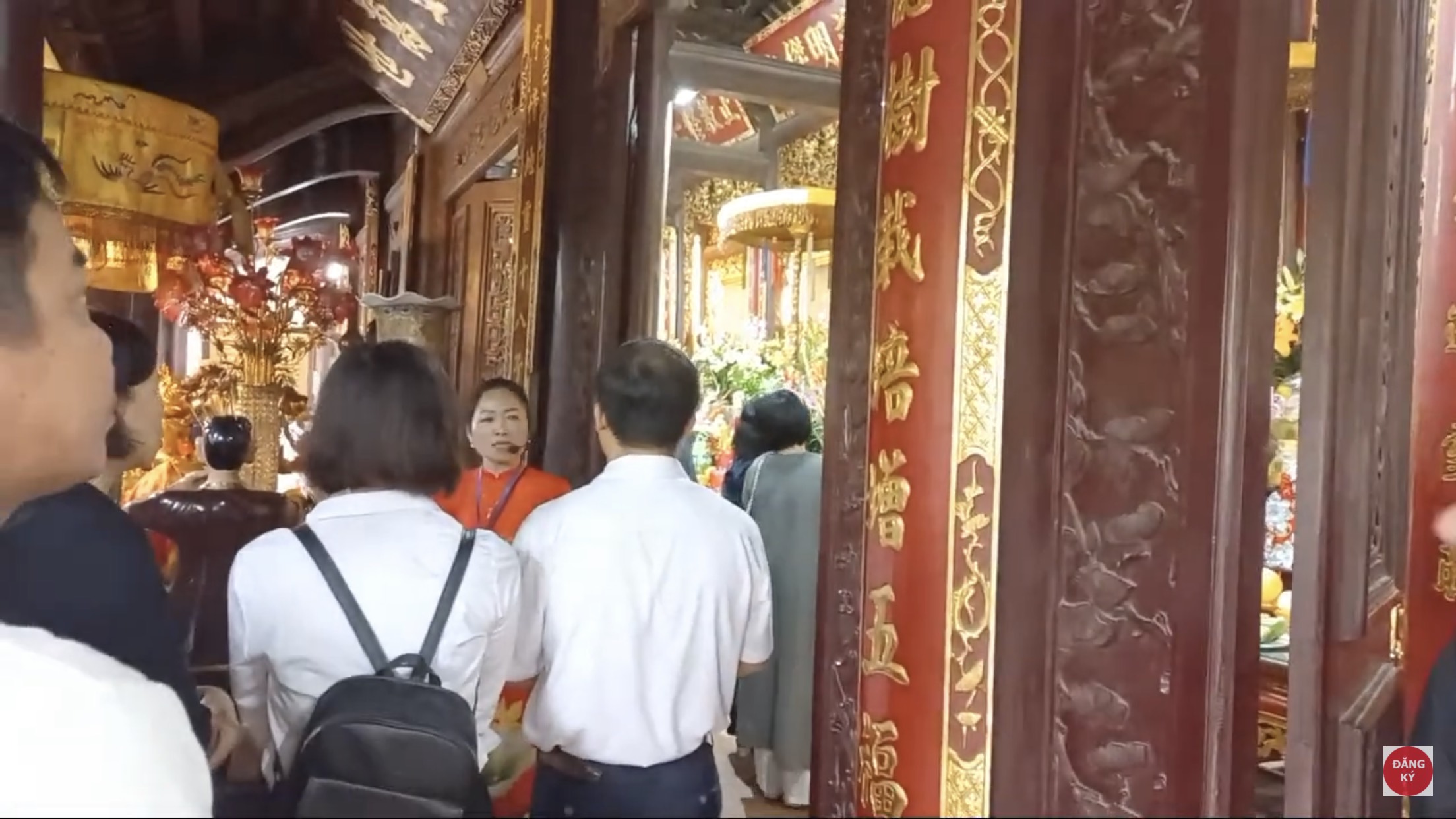
The tour guide is introducing about 8 kings of Ly Dynasty, photo by LAG Media
There is a new folk saying: During the reign of King Thai To and Thai Tong, good rice was full of fields, rice was piled up in warehouses. Therefore, King Ly Thai Tong attaches great importance to the development of handicrafts since the 1040s. The princesses – princesses under King Ly Thai Tong’s reign had to grow mulberries to feed silkworms, weave brocade, and wear them. import brocade from China.
The third king was King Ly Thanh Tong. When ascending the throne, we changed the name of our country to Dai Viet to mean that our small country of Vietnam must be on par with Dai Tong in the North. He was the first person to build the first university of our country to train doctoral-level talents, which was the Temple of Literature and later King Ly Nhan Tong continued to build Quoc Tu Giam.
The 4th King was King Ly Nhan Tong, the only son of King Ly Thanh Tong and former concubine Ỷ Lan. When he ascended to the throne, he opened the Minh Kinh examination and studied Confucianism first at the Temple of Literature, Quoc Tu Giam. It was he who opened the southern border so that Dai Viet’s army and people had a heroic victory against the invaders of the Song Dynasty. He ascended the throne when he was only 6 years old, but according to history books, he was the person who ruled the country the longest in the history of feudal dynasties of Vietnam. He reigned for 56 years and died at the age of 62.
The 5th king was King Ly Than Tong, the adopted son of King Ly Nhan Tong. He ascended the throne at a very young age, at the age of 13. When he ruled the country peacefully, he built three large dikes in Kinh Bac area to prevent floods and protect the people’s crops.
The sixth king is King Ly Anh Tong, when he ascended the throne, he went to the island twice to draw a map for Vietnam and build the first international trading port to exchange and trade with foreign countries. Fort – Quang Ninh. He died at the age of 40 and passed the throne to his second son, Ly Cao Tong.
The 7th king, King Ly Cao Tong, ascended the throne when the Ly dynasty’s inheritance fell into decline, war, poverty, and chaos occurred continuously. When he reigned, he was greatly helped by a famous royal lieutenant in the family, To Hien Thanh, so he stood firmly on the throne for 35 years. He died at the age of 38, passing the throne to his eldest son, King Ly Hue Tong.
The 8th king was King Ly Hue Tong. When he ascended to the throne, the Ly dynasty’s inheritance at that time fell into decline, the court carried the Ly surname, but mainly mandarins and martial arts were brought in by the Tran family, the power was mainly in the hands of a famous Thai monk. Mr. Tran Thu Do.
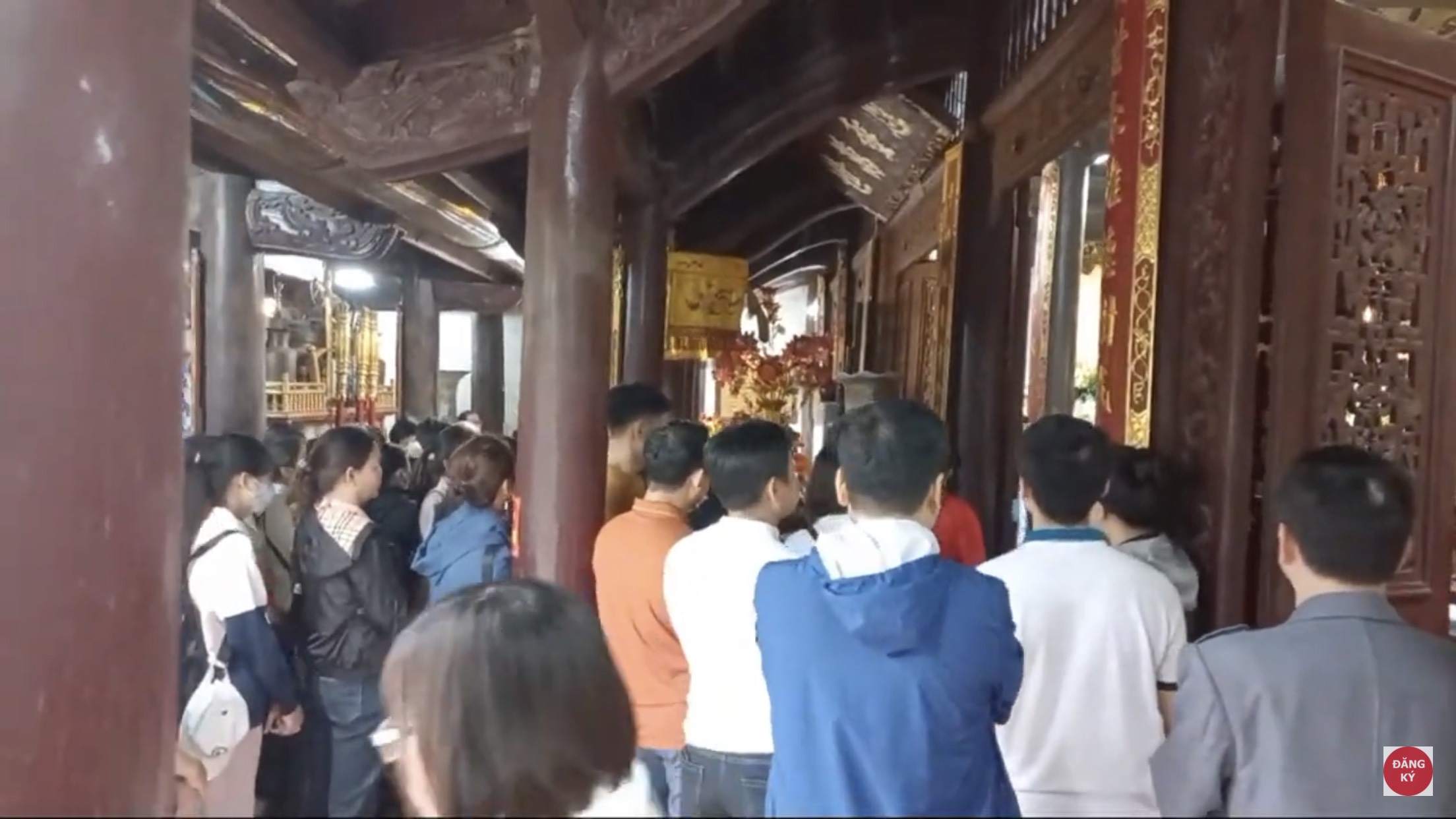
The tour guide is introducing about 8 kings of Ly Dynasty, photo by LAG Media
Because of poor health, King Ly Hue Tong soon passed the throne to his daughter, Ly Chieu Hoang, and then he left home to become a monk.
On the left side of Do Temple, there is an ancient stele – where “Co Phap Dien Tao Bi” is located. This stele is 190 cm high, 103 cm wide and 17 cm thick, engraved with the Year of the Dragon (1605). The beer is delicately carved, the forehead of the stele is shaped like a two dragons adoring the moon. The full moon is embossed, surrounded by the image of a shining halo. The heart of the stele is engraved with 35 lines of Chinese characters, interspersed with some Nom characters, totaling about 1,500 words.
In the exterior of Do Temple, there is also Thuy Dinh house. The 5-room-wide Thuy Dinh has the architecture of 8 roofs, 8 curved knives, made of solid ironwood, carved with sophisticated patterns. Thuy Dinh house is located on a semicircular lake, connected to the main courtyard by a stone bridge. This is the place where the art of water puppetry often takes place and is also the place for the brothers and sisters of Bac Ninh to sing quan ho passionately.
The Thuy Dinh house was chosen by the old Indochina Bank as the image printed on “five gold coins” and the image printed on the current 1,000-dong coin.
In addition to the water house, the stele house, the exterior of the Do Temple also has a square house, a celebrant house, a warehouse, a guest house and a temple of King Ba (worshiping Ly Chieu Hoang, also known as the Dragon Temple).
On the left and right sides of Do Temple is the most typical church of mandarins and martial arts during the 216 years of the Ly Dynasty.
The Van Quan house has three large match-stacks located on the left side of the inner city to worship To Hien Thanh and Ly Dao Thanh, the mandarins who made great contributions to the Ly dynasty.
The Vo Quan house only has the same architecture as the writer, on the right side of the inner city to worship Le Phung Hieu, Ly Thuong Kiet, and Dao Cam Moc who are very talented martial arts officials.
Thus, we have just read about Do Temple (Ly Bat De Temple) – a famous place of cultural preservation and great artistic value in Bac Ninh. Surely you, like me, have been lost in the ancient space of the ancient and feudal dynasties of Vietnam and fully feel the culture and history of the once flourishing dynasty of Vietnam.
In the early spring atmosphere of the Lunar New Year 2023, let’s light a candle to pay respect at Temple Do and pray for luck, peace and happiness to everyone. Hope to see you again at Temple Do during these sacred festivals.
Good bye and see you again!
Views: 1196


Sommaire 1. Le Live Chat : Une Assistance Instantanée 2. L’Email : Pour les Demandes Détaillées et les Preuves...
Obsah Prečo Tipsport požaduje overenie účtu? Potrebné dokumenty pre úspešnú verifikáciu Najčastejšie dôvody zlyhania overenia Krok za krokom: Ako...

Great with the model of Taylor Swift’s success – Country music princess Taylor Swift was born on December 13,...

The phone connoisseurs heat up with the launch of the super product Galaxy S23 Ultra in Vietnam In Vietnam,...

Agoda (Nasdaq: BKNG) is one of the fastest growing online travel service providers. Founded in 2007, the small startup...


 Visit Today : 247
 Visit Yesterday : 198
 Total Visit : 112413
 Who's Online : 1